
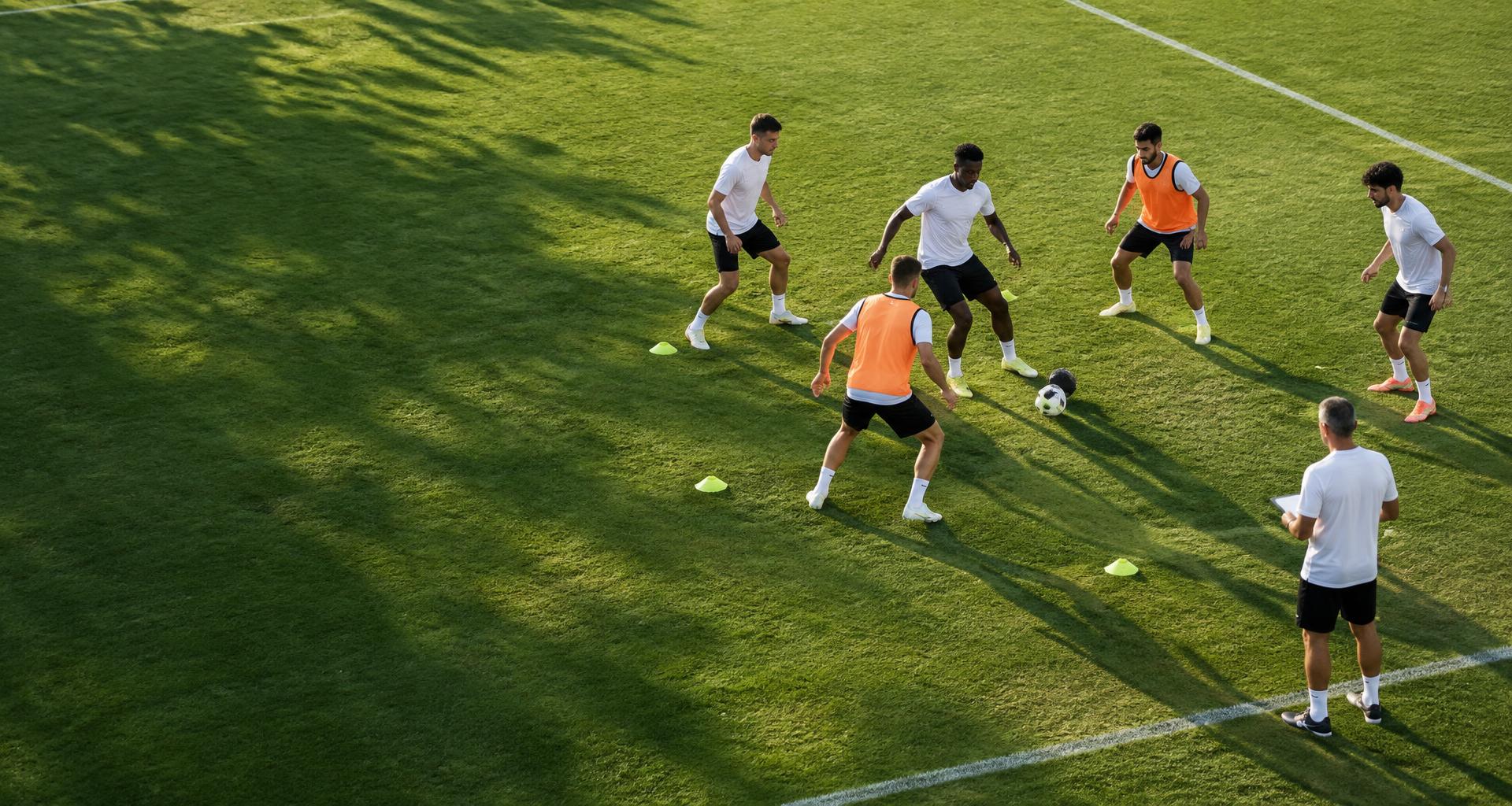
The ClubModel 5Ps Game Model
A practical framework for turning football philosophy into a shared language coaches and players can recognise, discuss and apply.
Why a Game Model needs usable language
A club can have an inspiring philosophy and still struggle to make it visible on the pitch. The challenge is translating broad ideas into football language that leaders, coaches and players can use consistently. ClubModel uses five connected lenses — Perception, Positioning, Possession, Penetration and Press — to help make that translation.
1. Perception — what information matters?
Before a player acts, they need to recognise what is happening around them. Perception focuses attention on the information that supports good decisions: teammates, opponents, space, pressure, movement and the changing picture of the game. It connects the club’s football ideas to what players learn to notice.
2. Positioning — where can we influence the game?
Positioning considers where players locate and move themselves in relation to the ball, teammates, opponents, space and the team’s intention. Good positioning is not simply occupying a prescribed spot. It creates useful relationships and improves the options available to the player and the team.
3. Possession — how do we use and protect the ball?
Possession describes the behaviours that help the team receive, retain, circulate and manage the ball. For ClubModel, possession is not an end in itself. Keeping the ball should create the conditions to progress, manipulate pressure or prepare the next action.
4. Penetration — when and how do we progress?
Penetration gives purpose to possession. Players learn to recognise opportunities to play forward, break lines, outplay opponents and threaten the goal. The best solution may be a combination, a carry or a single penetrating pass. The principle guides the intention rather than prescribing one action.
5. Press — how do we act without the ball?
Press describes the team’s collective and individual response when the opposition has possession. It connects pressure on the ball with supporting positions, distances, cues and the intention to regain control, deny progression or protect important space.
Five lenses, one connected game
The 5Ps are not five separate phases of football. They overlap continuously. What a player perceives influences positioning; positioning changes possession options; possession can create penetration; losing the ball changes the information and pressing problem immediately. The framework gives a club a shared way to discuss those connections.
Alignment without prescription
The purpose of the 5Ps is not to create identical coaches or teams. It gives the club common reference points while allowing coaches to adapt to age, ability, opposition and context. That is the ClubModel principle: aligned in purpose, flexible in practice.
Ready to bring your
club together?
Let’s understand your priorities and find your shared direction.