
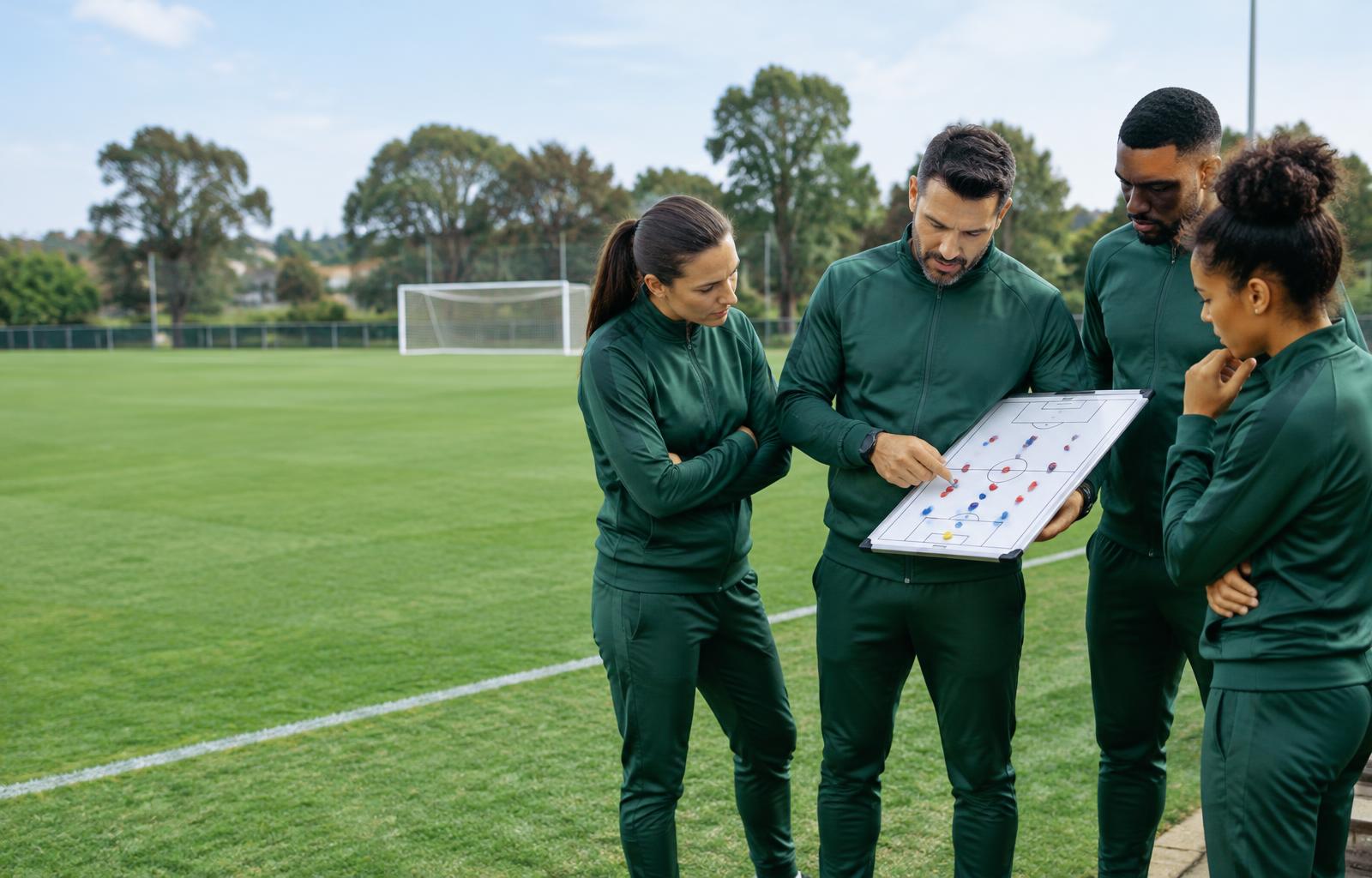
How to Align Football Coaches Without Removing Their Autonomy
Club alignment should create a shared football direction, not a group of coaches who all sound and work exactly the same.
The problem with confusing alignment and uniformity
Clubs often want greater consistency across teams, but consistency can be interpreted as every coach using the same session, formation or intervention. That may create visible uniformity, yet it can weaken judgement and ownership. Alignment is different: people understand the same direction and principles while retaining responsibility for how they apply them.
Be clear about what belongs to the club
A club should define the football ideas that need continuity: identity, Technical DNA, Game Model principles, development priorities and shared language. These become reference points across the pathway. They tell coaches what the club is trying to develop without attempting to dictate every coaching decision.
Leave room for what belongs to the coach
The coach knows the players in front of them. They see confidence, fatigue, understanding, opposition behaviour and the details of the training environment. Practice design, communication and intervention therefore require judgement. ClubModel protects that space because coach adaptability is part of effective development.
Develop understanding rather than distribute instructions
Documents alone rarely create alignment. Coaches need opportunities to discuss the club’s principles, see them in football, apply them, reflect and receive feedback. Development should help coaches understand why a principle matters and recognise when it is relevant, rather than simply telling them what activity to run.
Use shared language to improve conversations
Common football language makes technical conversations more precise. Coaches can discuss the same Game Model principles, player behaviours and football problems while proposing different solutions. That gives technical leadership a stronger basis for support and allows coaches to learn from one another without losing individual style.
Aligned in purpose. Flexible in practice.
The strongest form of alignment is visible when different coaches make contextually appropriate decisions that still move players toward a recognisable club direction. The club provides clarity and continuity; the coach provides judgement and adaptation. Both are necessary.
Ready to bring your
club together?
Let’s understand your priorities and find your shared direction.